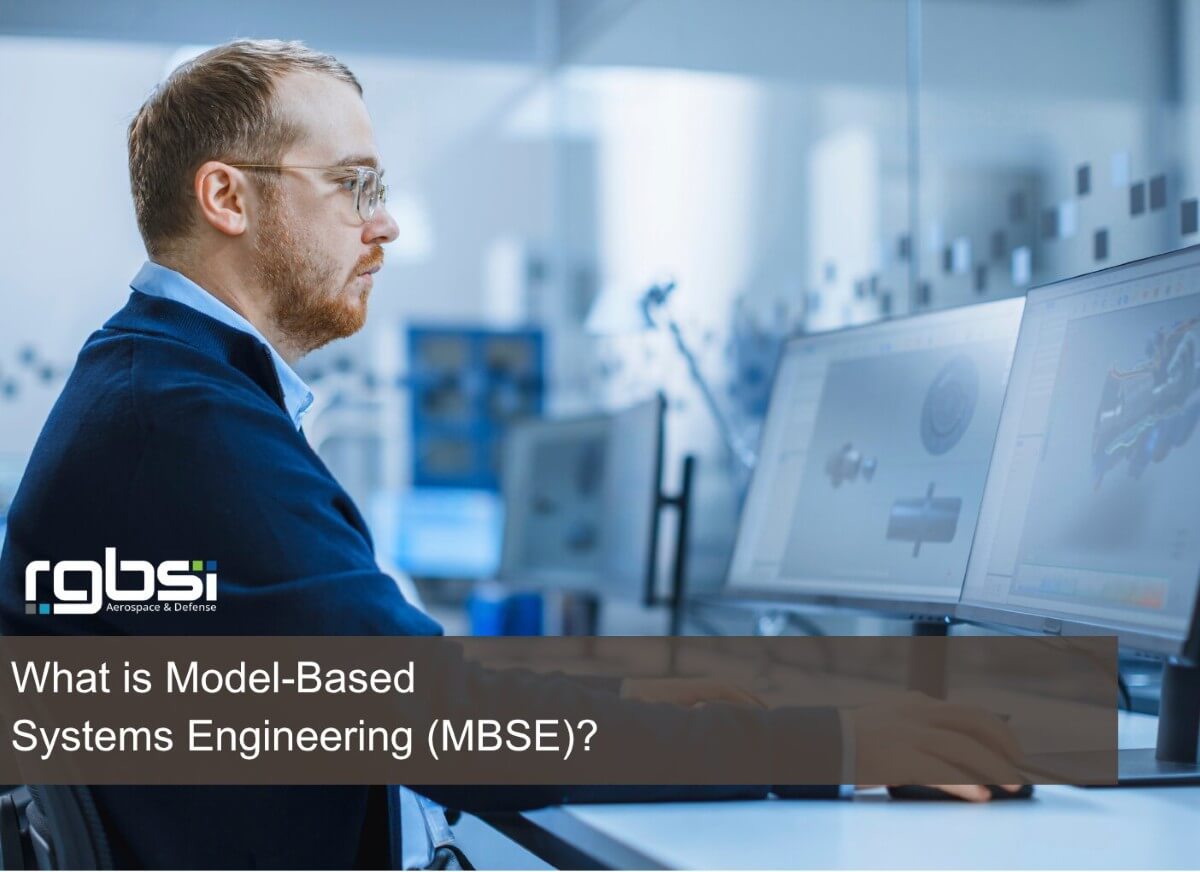
What Is Model-Based Systems Engineering (MBSE)?
Designed to support better lifecycle decisions for products, MBSE is a growing opportunity for companies to utilize model-based processes across operations. INCOSE, the International Council on Systems Engineering, defined MBSE in their 2020 Systems Engineering Vision as the following:
“MBSE is the formalized application of modeling to support system requirements, design, analysis, verification and validation activities beginning in the conceptual design phase and continuing throughout development and later life cycle phases… MBSE is expected to replace the document-centric approach that has been practiced by systems engineers in the past and to influence the future practice of systems engineering by being fully integrated into the definition of systems engineering processes.”
Migrating away from a document-centric approach and toward a digital collaboration environment offers organizations tremendous operational advantages.
Key benefits of MBSE include:
 Optimizes Productivity
 Minimizes Risk
 Facilitates Cross-Team Communication
Business Challenges with Full-Scale Integration
The rapid transformation in system complexity has prompted industry leaders to leverage MBSE as a method to support better lifecycle decisions for products. With embedded systems creating a need for digitalization, numerous industries must consider full-scale MBSE adoption due to increasing complexity, even if there is greater upfront investment.
Given this need, why is it so challenging to integrate enterprise-wide solutions?

Figure 1: Rubik’s Cube Approach
While this answer is multi-faceted, one visual that our team at RGBSI A&D uses to explain this problem is the Rubik’s Cube Approach (Figure 1).
Given that MBSE addresses critical linkages across processes and capabilities, any significant change in any one area may drive a corresponding change in all other areas.
The Rubik’s Cube Approach also illuminates another key barrier to organizational MBSE adoption: the centrality of cultural changes in support of MBSE. This is why RGBSI A&D researches and implements holistic MBSE strategies that address tools, technologies, and people impacted by this transition.
Interested in learning more about how your organization could benefit from MBSE? Start a dialogue with our team of qualified experts.